Electrical Discharge Machine (EDM)
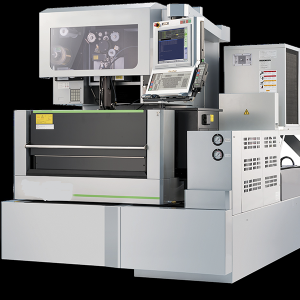
High quality Electrical Discharge Machines designed for high-precision machining of complex and hard conductive materials using controlled electrical discharges.
Overview
Electrical Discharge Machining (EDM), also known as spark machining, spark eroding, burning, die sinking, wire burning, or wire erosion, is a non-traditional machining process used to manufacture complex and high-precision components from electrically conductive materials. Unlike conventional machining methods, EDM removes material without physical contact between the tool and the workpiece.
Working Principle
The EDM process operates by generating a series of controlled electrical discharges (sparks) between an electrode and the workpiece. Both components are submerged in a dielectric fluid. When sufficient voltage is applied across a very small gap, the dielectric breaks down and a spark occurs. Each spark produces intense localized heat of approximately 10,000°C, causing a small portion of the workpiece material to melt and vaporize.
Spark Erosion Mechanism
Spark generation in EDM is intermittent rather than continuous. After each discharge, the dielectric fluid rapidly cools the machining zone and flushes away the molten particles. This leaves behind a microscopic crater on the workpiece surface. By repeating this process thousands of times per second, highly accurate shapes and fine surface details are produced.
Role of Dielectric Fluid
The dielectric fluid is essential to EDM performance. It acts as an electrical insulator until breakdown voltage is reached, controls spark formation, cools both the electrode and workpiece, and removes eroded material from the gap. Common dielectric fluids include deionized water and specially formulated EDM oils.
Types of EDM Machines
- Die-Sinking EDM: Uses a shaped electrode to produce cavities, molds, and complex internal geometries.
- Wire EDM: Employs a continuously fed wire electrode to cut precise profiles and intricate contours.
- Fast Hole Drilling EDM: Designed for drilling small-diameter and deep holes with high accuracy.
Machinable Materials
EDM can only be used on electrically conductive materials. Typical materials include hardened and tool steels, stainless steel, titanium, carbide, aluminum, copper, and advanced alloys used in aerospace, medical, and defense industries.
Advantages
- Ability to machine extremely hard materials independent of hardness
- Exceptional dimensional accuracy and surface finish
- Ideal for complex shapes and fine details
- No cutting forces or mechanical stress on the workpiece
- High repeatability for precision manufacturing
Limitations
- Applicable only to electrically conductive materials
- Slower material removal rate compared to conventional machining
- Electrode wear requires careful control
- Higher operating costs due to power usage and consumables
Industrial Applications
- Mold and die manufacturing
- Aerospace and defense components
- Medical and surgical device production
- Automotive tooling and precision parts
- Micro-machining and high-tolerance engineering
EDM vs Electrostatic Discharge (ESD)
Electrical Discharge Machining should not be confused with Electrostatic Discharge (ESD). EDM is a controlled and purposeful industrial process, whereas ESD is an unintended release of static electricity that can damage electronic components.
Industrial Significance
EDM technology plays a critical role in modern manufacturing where conventional cutting methods are ineffective. Its capability to produce precise, intricate, and repeatable components makes it indispensable in high-precision and advanced industrial applications.
Interested in Electrical Discharge Machine (EDM)?
Send us your specifications, quantities, or technical questions — our team will respond within 24 hours with pricing, lead time, and engineering details.
- ✓ 24h response
- ✓ 600+ product network
- ✓ No obligation