
End Mills
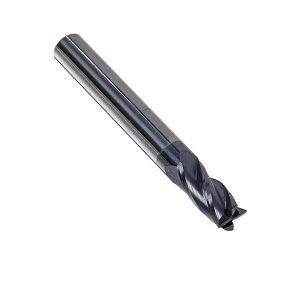
High quality End Mills designed for precision milling operations, offering high performance, durability, and accuracy for CNC and conventional milling applications across a wide range of materials.
Overview
End mills are rotary cutting tools used in milling machines to remove material from a workpiece. Unlike drill bits, which are designed only for axial cutting, end mills can cut in multiple directions, including axial, radial, and lateral directions. This versatility makes them essential tools in modern machining and manufacturing.
Basic Characteristics
End mills feature cutting edges on both the tip and the sides of the tool. This design allows them to perform a wide variety of milling operations such as slotting, profiling, contouring, plunging, and face milling. Their geometry and construction are optimized for accuracy, surface finish, and tool life.
End Mills vs Drill Bits
While drill bits are primarily designed to create round holes by cutting only in the axial direction, end mills are capable of cutting sideways as well as vertically. This allows end mills to create complex shapes, pockets, slots, and profiles that cannot be achieved with drilling tools.
Common Applications
- Profile milling and contouring
- Slotting and pocket milling
- Face milling and side milling
- Plunging and ramping operations
- Tracer and shape milling
Types of End Mills
- Roughing End Mills: Designed for high material removal rates with serrated cutting edges.
- Finishing End Mills: Used for achieving smooth surface finishes and tight tolerances.
- Square End Mills: Produce sharp corners and flat-bottomed slots.
- Ball End Mills: Ideal for 3D contouring, sculpted surfaces, and mold machining.
- Corner Radius End Mills: Reduce edge chipping and improve tool life.
- Corner Rounding End Mills: Used to create rounded edges on workpieces.
Materials and Coatings
End mills are manufactured from materials such as high-speed steel (HSS), cobalt steel, and solid carbide. Advanced coatings including TiN, TiAlN, AlTiN, and DLC are applied to improve wear resistance, heat tolerance, and cutting performance.
Flute Design and Geometry
The number of flutes affects chip evacuation, surface finish, and cutting forces. Low-flute end mills are preferred for soft materials and high chip removal, while higher flute counts are used for finishing operations and harder materials.
Material Compatibility
- Carbon steel and alloy steel
- Stainless steel
- Aluminum and non-ferrous metals
- Cast iron
- Plastics and composite materials
Tool Selection Considerations
Choosing the correct end mill requires evaluating material type, cutting speed, feed rate, depth of cut, surface finish requirements, and machine capability. Proper selection directly impacts productivity, tool life, and manufacturing cost.
Advantages
- Multi-directional cutting capability
- High precision and dimensional accuracy
- Wide variety of designs for different applications
- Compatibility with CNC and conventional milling machines
Industrial Importance
End mills are fundamental tools in modern manufacturing. They enable the production of complex components used in aerospace, automotive, electronics, medical devices, mold and die making, and general machining industries.
Production Efficiency
With proper selection and usage, end mills help reduce machining time, improve surface quality, and minimize tool wear, leading to lower production costs and higher overall efficiency.