
Milling Cutters
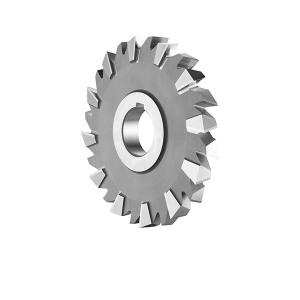
High quality Milling Cutters engineered for precision machining, offering excellent cutting performance, durability, and versatility across a wide range of milling applications.
Overview
Milling cutters are rotary cutting tools used primarily in milling machines and machining centers to remove material from a workpiece. They are essential tools in modern manufacturing and are capable of performing a wide variety of machining operations with high accuracy and efficiency.
Basic Function
Milling cutters remove material by rotating at high speed while the workpiece is fed against the cutting edges. Unlike turning operations, where the workpiece rotates, in milling the cutter is the rotating element, allowing for greater flexibility in shaping complex geometries.
Types of Milling Cutters
- Plain (Slab) Milling Cutters: Used for machining flat surfaces with the cutter axis parallel to the surface being machined.
- Side Milling Cutters: Cylindrical cutters with teeth on the circumference and both sides, ideal for slotting and side machining.
- Face Milling Cutters: Designed for producing smooth, flat surfaces with high material removal rates.
- End Mills: Versatile cutters capable of cutting in multiple directions for profiling, slotting, and plunging.
- Angle Milling Cutters: Used for machining angular surfaces and chamfers.
Milling Operations
- Surface (plain) milling
- Face milling
- Slotting and keyway cutting
- Profile and contour milling
- Die sinking and cavity machining
- Routing and complex shape machining
Tool Design Features
The performance of a milling cutter depends heavily on its design features. Key characteristics include cutter shape, number of flutes, helix angle, rake angle, center-cutting capability, shank type, roughing or finishing geometry, and surface coatings.
Flutes & Helix Angle
The number of flutes affects chip evacuation and surface finish. Fewer flutes allow better chip removal for soft materials, while more flutes improve finish and rigidity for harder materials. Helix angle influences cutting smoothness, vibration reduction, and tool life.
Materials Compatibility
- Carbon steel and alloy steel
- Stainless steel
- Cast iron
- Aluminum and non-ferrous metals
- Plastics and composite materials
Coatings & Tool Materials
Milling cutters are commonly manufactured from high-speed steel (HSS), solid carbide, or indexable insert bodies. Advanced coatings such as TiN, TiAlN, and AlCrN are applied to enhance wear resistance, heat resistance, and cutting performance.
Advantages
- High precision and repeatability
- Wide range of machining capabilities
- Suitable for both roughing and finishing operations
- High material removal rates
- Compatibility with CNC and conventional milling machines
Selection Criteria
Choosing the correct milling cutter requires consideration of workpiece material, cutting depth, feed rate, spindle speed, desired surface finish, and machine rigidity. Proper cutter selection improves productivity, tool life, and machining quality.
Industrial Applications
- Automotive and aerospace manufacturing
- Mold and die production
- General engineering and metal fabrication
- Tool and fixture manufacturing
- Precision machining industries
Manufacturing Importance
Milling cutters are fundamental to modern machining processes. Their versatility and precision make them indispensable in producing high-quality components with complex geometries, tight tolerances, and consistent surface finishes.