
Sanding Machine
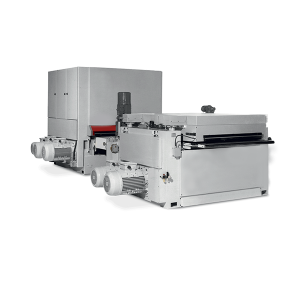
High quality Sanding Machines designed for surface finishing, smoothing, and material preparation through controlled abrasion using sandpaper or abrasive belts.
Overview
A sanding machine is a power-driven machine tool used to smooth, finish, or prepare surfaces by abrasion. It operates by moving sandpaper or other abrasive materials rapidly against a workpiece, removing small amounts of material to achieve a desired surface texture or finish.
Basic Definition
A sander is a machine that uses abrasive media such as sandpaper, belts, or discs to smooth rough surfaces, remove imperfections, or prepare materials for painting, coating, or further machining. Sanding machines can be handheld, bench-mounted, or industrial-sized depending on the application.
Working Principle
The sanding process works through abrasion. An abrasive surface is mounted on a moving mechanism such as a rotating disc, continuous belt, or oscillating pad. As the abrasive moves at high speed, it gradually removes surface material from the workpiece. The amount of material removed depends on abrasive grit size, applied pressure, and sanding speed.
Main Components
- Motor: Provides the power required to drive the sanding mechanism.
- Abrasive Holder: Holds sandpaper, belt, or disc securely.
- Drive Mechanism: Rotates, oscillates, or moves the abrasive surface.
- Housing: Encloses internal components and ensures safe operation.
- Dust Collection System: Removes sanding dust to improve safety and surface quality.
Types of Sanding Machines
- Belt Sander: Uses a continuous abrasive belt for rapid material removal on large surfaces.
- Disc Sander: Employs a rotating abrasive disc for edge and surface sanding.
- Orbital Sander: Moves the abrasive in small circular orbits for fine finishing.
- Random Orbital Sander: Combines rotation and orbiting motion for swirl-free finishes.
- Detail Sander: Compact tool designed for small, tight, or hard-to-reach areas.
- Drum Sander: Industrial machine used for sanding large flat panels uniformly.
Detail Sanders
Detail sanders, sometimes called thumb sanders, are compact sanding machines specifically designed for precision work. Their small size and triangular or pointed sanding pads make them ideal for corners, edges, and intricate surfaces where larger sanders may cause damage.
Abrasive Grit Selection
Sanding machines can be used for both rough and fine sanding depending on the grit of the abrasive material. Coarse grits are used for heavy material removal, while fine grits are applied for surface finishing and smoothing prior to painting or coating.
Materials That Can Be Sanded
- Wood and wood-based materials
- Metal surfaces
- Plastic and composite materials
- Painted or coated surfaces
- Drywall and filler compounds
Applications
- Surface preparation before painting or coating
- Furniture and woodworking industries
- Metal fabrication and finishing
- Construction and renovation projects
- Automotive body repair and refinishing
Advantages
- Improves surface smoothness and finish quality
- Versatile use across multiple materials
- Available in handheld and industrial configurations
- Reduces manual labor and increases productivity
Limitations
- Excessive sanding can remove too much material
- Dust generation requires proper extraction systems
- Not suitable for precise dimensional machining
Industrial Importance
Sanding machines are essential in both industrial and workshop environments for achieving high-quality surface finishes. They play a critical role in material preparation, aesthetic finishing, and ensuring proper adhesion of paints, coatings, and surface treatments.