Air Conditioning & Humidity Control
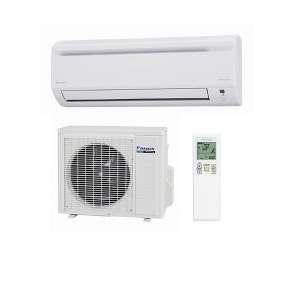
High quality Air Conditioning & Humidity Control systems designed to regulate temperature, humidity, and air flow, ensuring optimal indoor comfort and environmental stability across residential, commercial, and industrial applications.
Overview
Air Conditioning & Humidity Control systems are essential components of modern indoor climate management. Their primary purpose is to create and maintain comfortable and healthy indoor environments by controlling temperature, relative humidity, and air movement within enclosed spaces.
System Purpose & Comfort Control
The main objective of an air-conditioning system is to provide year-round comfort by maintaining indoor environmental conditions within desired limits. This is achieved through the combined regulation of temperature, humidity, and airflow, ensuring thermal comfort, air quality, and occupant well-being.
To achieve these comfort conditions, air-conditioning systems are equipped with three fundamental control mechanisms:
- Temperature Controls: Regulate indoor air temperature.
- Humidistats: Control and maintain relative humidity levels.
- Airstats: Manage airflow rate and air circulation within the space.
Temperature Control Systems
Temperature control devices maintain the indoor temperature according to predefined comfort requirements. When the desired temperature is reached, the control system automatically switches off the compressor. If the temperature deviates beyond a preset range, the compressor is restarted to restore the required conditions.
Temperature settings can be adjusted manually or automatically, typically through user interfaces such as wall-mounted controllers or remote control devices supplied with air-conditioning systems.
Room Thermostats
One of the most commonly used temperature control devices is the room thermostat. A thermostat continuously senses the indoor air temperature and opens or closes the electrical circuit supplying the compressor based on the measured value.
Among various thermostat designs, the bimetal room thermostat is widely used due to its simplicity and reliability. It consists of two bonded metals with different coefficients of thermal expansion. At a specific temperature, both metals are aligned, but as temperature changes, one metal expands more than the other, causing the bimetal strip to bend. This bending action mechanically opens or closes the electrical contacts that control the compressor operation.
Humidity Control
Humidity control is equally critical for maintaining comfort and preventing issues such as condensation, mold growth, static electricity, and material degradation. Humidistats monitor relative humidity levels and activate humidification or dehumidification processes as required.
Proper humidity control improves indoor air quality, protects building materials and equipment, and enhances occupant comfort, especially in environments with sensitive processes or stored materials.
Airflow Management
Airstats regulate the volume and movement of air within a space. Controlled airflow ensures even temperature distribution, effective ventilation, and removal of stale air. Balanced air circulation is essential for efficient system performance and energy optimization.
Applications
- Residential buildings
- Commercial offices and shopping centers
- Industrial facilities and production areas
- Hospitals, laboratories, and clean rooms
- Data centers and equipment rooms
Key Advantages
- Year-round indoor comfort
- Precise temperature and humidity regulation
- Improved indoor air quality
- Energy-efficient system operation
- Protection of occupants, equipment, and materials
Interested in Air Conditioning & Humidity Control?
Send us your specifications, quantities, or technical questions — our team will respond within 24 hours with pricing, lead time, and engineering details.
- ✓ 24h response
- ✓ 600+ product network
- ✓ No obligation