Stroboscope
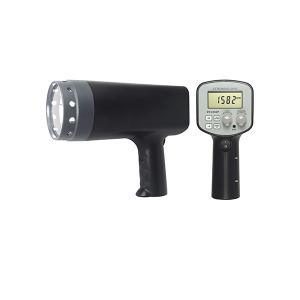
High quality Stroboscope designed for non-contact measurement and visual analysis of rotational speed, vibration, and cyclic motion in industrial, laboratory, and maintenance applications.
Overview
A stroboscope, also known as a strobe, is a precision measuring and inspection instrument used to visually analyze objects in periodic or rotational motion. By emitting flashes of light at controlled and adjustable frequencies, a stroboscope can make fast-moving objects appear stationary, slow-moving, or moving in reverse without physically contacting the object.
Basic Working Principle
The operating principle of a stroboscope is based on synchronized flashing. When the flash frequency of the stroboscope matches the rotational or cyclic frequency of a moving object, the object appears stationary to the human eye. If the flash frequency is slightly offset, the object appears to move slowly forward or backward.
Stroboscopic Effect
The stroboscopic effect occurs because the human eye perceives motion as a sequence of discrete images. By illuminating the object only at specific intervals, the stroboscope effectively 'freezes' motion, allowing detailed visual inspection of high-speed processes.
Main Components
- High-intensity flash light source (LED or xenon flash tube)
- Frequency control system
- Digital or analog display
- Power supply (battery or mains powered)
- Trigger and synchronization circuitry
Types of Stroboscopes
- Mechanical Stroboscope: Uses a rotating disk with slots or holes.
- Xenon Flash Stroboscope: Produces high-intensity flashes suitable for industrial use.
- LED Stroboscope: Energy-efficient, long lifespan, and precise frequency control.
- Digital Stroboscope: Equipped with digital displays and microprocessor-based control.
Measurement Capabilities
- Rotational speed (RPM measurement)
- Vibration and oscillation analysis
- Inspection of rotating shafts, gears, and belts
- Detection of mechanical defects such as imbalance or misalignment
Non-Contact Measurement Advantage
One of the key advantages of a stroboscope is its ability to perform measurements without physical contact. This makes it ideal for inspecting delicate, hazardous, or high-speed rotating equipment where contact-based measurement is unsafe or impractical.
Applications
- Industrial maintenance and troubleshooting
- Machinery diagnostics and condition monitoring
- Quality control and inspection lines
- Motor, fan, and pump analysis
- Printing and textile machinery inspection
- Research laboratories and educational use
Advantages
- Accurate RPM measurement without stopping machinery
- Safe inspection of high-speed moving parts
- Immediate visual feedback
- Portable and easy to use
- Minimal setup and calibration requirements
Limitations
- Possible harmonic misinterpretation if not properly adjusted
- Limited effectiveness in very bright ambient light
- Requires operator experience for precise interpretation
Industrial Importance
Stroboscopes are indispensable tools in modern industry for preventive maintenance, diagnostics, and quality inspection. Their ability to visualize motion that is otherwise invisible to the naked eye makes them essential for ensuring operational reliability, safety, and performance efficiency.
Etymology
The term 'stroboscope' originates from the Greek word strobos, meaning 'whirling' or 'spinning', accurately reflecting the device’s primary function of analyzing rotating and cyclic motion.
Interested in Stroboscope?
Send us your specifications, quantities, or technical questions — our team will respond within 24 hours with pricing, lead time, and engineering details.
- ✓ 24h response
- ✓ 600+ product network
- ✓ No obligation