Flaw & Crack Detection
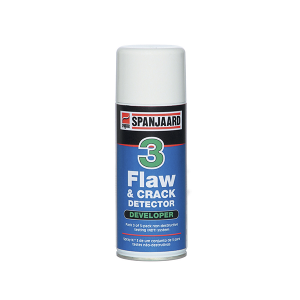
High quality Flaw & Crack Detection solutions designed for reliable non-destructive inspection of surface and internal defects in metals, welds, and structural components.
Overview
Flaw & Crack Detection refers to inspection methods used to identify surface and subsurface defects such as cracks, porosity, inclusions, and discontinuities in materials and welded joints. These systems are essential for quality control, safety assurance, and compliance with industrial standards.
Non-Destructive Testing (NDT)
Most flaw and crack detection techniques are based on Non-Destructive Testing (NDT), allowing inspection without damaging or altering the tested component. NDT enables repeated inspections throughout the service life of a component.
Penetrant Testing (PT)
Penetrant testing is widely used for detecting surface-breaking defects. The process involves applying a penetrant liquid to the surface, allowing it to seep into cracks, removing excess penetrant, and then applying a developer. The developer draws the penetrant out of defects, making flaws clearly visible.
AeroTest Flaw Detector Kits are designed to provide fast, reliable, and high-contrast defect visualization for welds, castings, forgings, and machined components.
Ultrasonic Testing (UT)
Ultrasonic testing uses high-frequency sound waves to detect internal defects. Ultrasonic waves are transmitted into the material, and any discontinuity causes partial reflection of the waves. These reflections are detected and analyzed to identify the location and size of flaws.
This method is particularly effective for thick materials and internal crack detection, including stone, metals, and composite structures.
Testing Methods Classification
- Non-Destructive Testing (NDT): Penetrant testing, ultrasonic testing, magnetic particle testing, radiographic testing
- Destructive Testing: Tensile testing, impact testing, bend testing (used mainly for qualification and research)
Applications
- Weld inspection and quality assurance
- Pressure vessels and pipelines
- Aerospace and automotive components
- Structural steel and fabrication industries
- Maintenance, repair, and overhaul (MRO)
Advantages
- Detection of defects invisible to the naked eye
- No damage to inspected components
- High reliability and repeatability
- Compliance with international inspection standards
- Improved safety and product integrity
Industrial Importance
Flaw and crack detection systems play a critical role in preventing catastrophic failures, extending component life, and ensuring structural reliability. They are indispensable tools in modern manufacturing, welding, and maintenance operations.
Interested in Flaw & Crack Detection?
Send us your specifications, quantities, or technical questions — our team will respond within 24 hours with pricing, lead time, and engineering details.
- ✓ 24h response
- ✓ 600+ product network
- ✓ No obligation