Die Mold Components
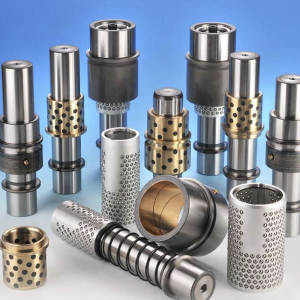
Precision die and mold components designed for stamping, forming, injection molding, and tooling applications. These components ensure accuracy, durability, and repeatability in die and mold assemblies used across a wide range of manufacturing industries.
Overview
Die mold components are essential elements used in the construction and operation of dies and molds for manufacturing processes such as stamping, forming, injection molding, and blow molding. Dies and molds are typically custom-designed tools that shape, cut, or form materials—most commonly metals and plastics—into finished or semi-finished products.
What Is a Die?
A die is a specialized tool, usually made from hardened metal, with a precise shape or pattern used to cut, bend, or form material under pressure. Dies are widely used in press operations and can produce parts ranging from simple components like paper clips to complex parts used in advanced technologies.
What Is a Mold?
Molds are tools generally used in injection molding or blow molding processes. They are commonly manufactured from tool steel, aluminum, copper, or specialized alloys, and are designed to repeatedly produce identical parts with high accuracy.
Typical Die & Mold Components
- Mold bases
- Guide pins and guide bushings
- Ejector pins and ejector sleeves
- Core pins
- Lifters
- Alignment and locating devices
- Wear plates and backing plates
Die Operations
Die operations are often named after the function they perform. A single die may perform one or multiple operations depending on its design.
- Bending dies
- Blanking dies
- Piercing dies
- Forming dies
- Progressive dies (multiple operations in one tool)
Key Characteristics
- High dimensional accuracy and repeatability
- Designed for long service life under high loads
- Customizable to specific part geometries
- Compatible with high-speed and high-volume production
Applications
- Metal stamping and forming
- Injection molding and blow molding
- Automotive and aerospace manufacturing
- Electronics and precision components
- Industrial tooling and mass production systems
Advantages
- Consistent product quality
- Reduced production cycle times
- High production efficiency
- Interchangeable and standardized components available
Interested in Die Mold Components?
Send us your specifications, quantities, or technical questions — our team will respond within 24 hours with pricing, lead time, and engineering details.
- ✓ 24h response
- ✓ 600+ product network
- ✓ No obligation