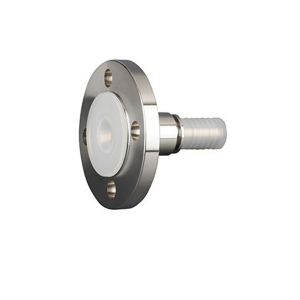
Fixed Flange Type
Fixed flange type expansion joints are used to absorb thermal expansion and vibration while providing a rigid, leak-tight flanged connection. They allow easy dismantling for maintenance and are widely used in industrial piping systems connected to valves, pumps, and equipment.
Overview
Fixed flange type expansion joints utilize flanged connections, which are the second most commonly used pipe joining method after welding. Flanged joints are preferred where dismantling is required for inspection, maintenance, or replacement of piping components, valves, or equipment.
Flanged Joint Concept
A flanged joint consists of three independent but interrelated components:
- Flanges
- Gaskets
- Bolting
These elements are assembled by controlled tightening to achieve acceptable leak-tightness and structural integrity.
Design Characteristics
- Rigid flanged ends provide strong mechanical connection
- Allows easy dismantling for periodic maintenance
- Connects pipes to valves, pumps, heat exchangers, and other equipment
- Often used where breakup flanges are required in pipeline systems
Operational Considerations
- Special care is required in gasket selection, bolt tightening, and flange alignment
- Proper assembly ensures leak-tight and safe operation
- Flanged connections are not recommended for buried or underground piping systems
- Flanges are one of the most common sources of leakage if improperly installed
Applications
- Industrial piping systems requiring frequent maintenance
- Process plants and refineries
- Power generation facilities
- Piping connections to valves, pumps, and equipment
Classification of Flanges
Flanges used in fixed flange type connections can be classified based on:
- Type of connection
- Flange facing type
- Pressure and temperature ratings
- Material types
Key Advantages
- Easy assembly and disassembly
- Flexible solution for maintenance-intensive systems
- Wide range of materials and pressure classes available
- Reliable connection when properly designed and installed