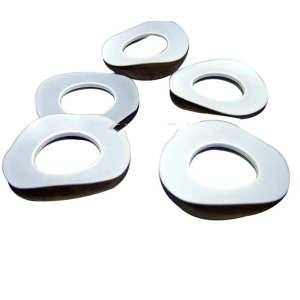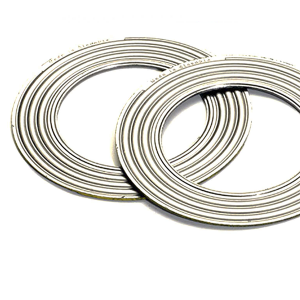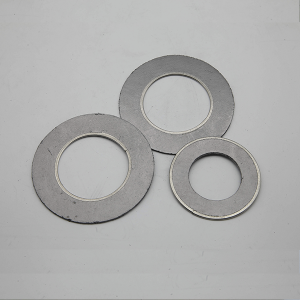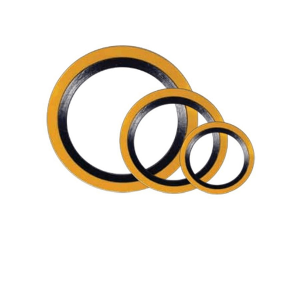
Heat Exchanger Gaskets
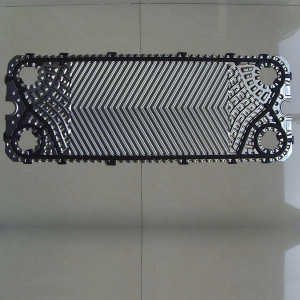
Heat exchanger gaskets are critical sealing components designed to prevent leakage between heat exchanger plates, shells, and channels while ensuring efficient heat transfer. They provide reliable sealing under high pressure, temperature variations, and aggressive process conditions.
Overview
Heat exchanger gaskets are used to seal the interfaces between heat exchanger components, ensuring that fluids transfer heat efficiently without mixing or leaking. They play a vital role in maintaining system safety, performance, and operational efficiency.
Function & Purpose
- Prevents leakage between hot and cold fluid channels
- Maintains pressure integrity within the heat exchanger
- Ensures efficient heat transfer without fluid contamination
- Compensates for thermal expansion and contraction
Heat Exchanger Principle
Heat exchangers transfer thermal energy between two or more fluids without allowing them to come into direct contact. One fluid absorbs heat while the other releases it, enabling controlled temperature regulation in industrial and mechanical systems.
Types of Heat Exchanger Gaskets
- Plate heat exchanger gaskets
- Shell and tube heat exchanger gaskets
- Spiral heat exchanger gaskets
- Custom-shaped gaskets for specialized exchangers
Materials
- Elastomers (EPDM, NBR, FKM / Viton)
- PTFE
- Graphite
- Metal-reinforced gasket materials
Operating Characteristics
- High resistance to temperature fluctuations
- Excellent chemical compatibility depending on material selection
- Reliable sealing under varying pressure conditions
- Long service life with stable sealing performance
Applications
- Heating and cooling systems
- Air conditioning and refrigeration units
- Power generation plants
- Chemical and petrochemical industries
- Oil and gas processing
- Food and beverage processing
- Industrial machinery temperature control
Performance Considerations
- Effectiveness depends on gasket material and heat exchanger design
- Supports efficient heat transfer without pressure loss
- Must be selected according to operating temperature, pressure, and fluid type
Key Advantages
- Prevents cross-contamination of fluids
- Improves operational safety and reliability
- Enhances heat exchanger efficiency
- Reduces maintenance and downtime
- Available in standard and custom designs
Interested in Heat Exchanger Gaskets?
Send us your specifications, quantities, or technical questions — our team will respond within 24 hours with pricing, lead time, and engineering details.
- ✓ 24h response
- ✓ 600+ product network
- ✓ No obligation