Rubber Gaskets
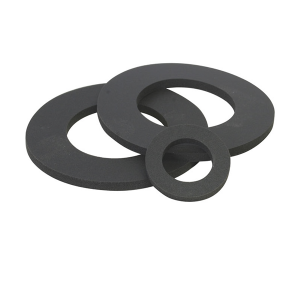
Rubber gaskets are flexible sealing elements designed to prevent leakage of liquids and gases, provide environmental protection, and act as a barrier between mating surfaces across a wide range of industrial and commercial applications.
Overview
Rubber gaskets are mechanical sealing components manufactured from elastomeric materials and primarily used to prevent leakage of fluids or gases between two mating surfaces. In addition to sealing, they also serve as protective barriers against moisture, dust, chemicals, and external environmental factors.
Function & Purpose
- Prevents leakage of liquids and gases
- Acts as a barrier between dissimilar materials
- Provides protection against dust, moisture, and contaminants
- Absorbs vibration and compensates for surface irregularities
Design Characteristics
- Flat gasket designs cut from rubber sheets
- Custom shapes and dimensions according to application
- Designed to work under compression
- Not covered: O-rings, 3D molded parts, or rubber profiles
Common Rubber Materials
- Natural Rubber (NR)
- EPDM
- Nitrile Rubber (NBR)
- Neoprene (CR)
- Silicone Rubber
- Viton / FKM (for high temperature and chemical resistance)
Material Selection Criteria
- Operating temperature
- Type of media (oil, water, gas, chemicals)
- Rubber hardness (Shore A)
- Tensile strength and elongation
- Environmental exposure (UV, ozone, moisture)
Manufacturing Method
Rubber gaskets are typically produced by cutting or stamping from rubber sheets based on customer drawings and material specifications. Each gasket is designed specifically for its intended application, making rubber gaskets highly application-specific products.
Applications
- Industrial machinery and equipment
- HVAC systems
- Automotive and transportation
- Household appliances (refrigerators, washing machines)
- Construction and infrastructure
- Chemical and process industries
- Electronics and optical equipment
Advantages
- Excellent sealing performance at low to medium pressures
- High flexibility and adaptability to surface imperfections
- Wide range of elastomer options for different conditions
- Cost-effective and easy to install
- Customizable for nearly any shape or size
Notes
- Proper material selection is critical for service life
- Each application typically requires a unique gasket design
- Performance depends on compression, environment, and media compatibility
Interested in Rubber Gaskets?
Send us your specifications, quantities, or technical questions — our team will respond within 24 hours with pricing, lead time, and engineering details.
- ✓ 24h response
- ✓ 600+ product network
- ✓ No obligation