Bolts
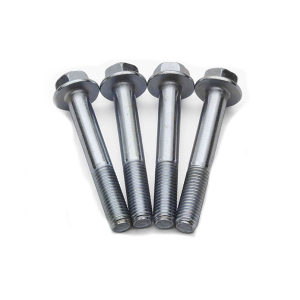
Bolts are high-strength threaded fasteners used to create secure bolted joints by applying axial clamping force together with a nut. Designed to resist both tensile and shear loads, bolts are widely used in structural, mechanical, and industrial applications across multiple sectors.
Overview
Bolts are threaded fasteners primarily used together with nuts to form bolted joints. In a bolted connection, the nut applies axial clamping force while the bolt shank helps resist shear forces, ensuring joint stability and structural integrity.
Function & Working Principle
- The nut tightens onto the bolt to generate axial clamping force
- The bolt shank acts as a dowel to resist lateral (shear) forces
- Creates a strong, removable, and reliable mechanical joint
Design & Construction
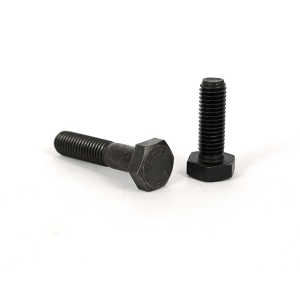
- Externally threaded cylindrical shank
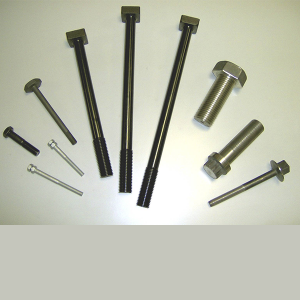
- Available with hex head, square head, countersunk head, or special heads
- Can be fully threaded or partially threaded depending on application
Materials
- Carbon Steel
- Alloy Steel
- Stainless Steel
Performance Characteristics
- High tensile and shear strength
- Reliable load distribution in bolted joints
- Suitable for high-pressure and high-temperature environments
- Reusable and easy to assemble or dismantle
Applications
- Structural steel constructions
- Industrial machinery and equipment
- Oil, gas, and petrochemical plants
- Power generation facilities
- Automotive and heavy engineering industries
Standards & Compatibility
Bolts are manufactured according to international standards such as ASTM, DIN, ISO, and ASME, ensuring compatibility with corresponding nuts, washers, and fastening systems.
Key Advantages
- Strong and secure mechanical fastening
- Excellent resistance to tensile and shear loads
- Wide range of sizes, grades, and materials
- Easy maintenance and replacement
- Suitable for both temporary and permanent joints
Interested in Bolts?
Send us your specifications, quantities, or technical questions — our team will respond within 24 hours with pricing, lead time, and engineering details.
- ✓ 24h response
- ✓ 600+ product network
- ✓ No obligation