Reduction
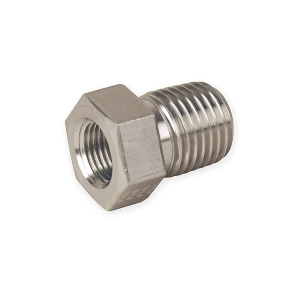
Reducing flanges are specialty flanges designed to connect pipes of different diameters within a piping system. They provide a compact, efficient, and cost-effective solution for diameter transitions while maintaining flange integrity and pressure ratings.
Overview
Reducing flanges are used in piping systems where a change in pipe size is required. They consist of a flange whose outer dimensions match the larger pipe size, while the bore is reduced to match the smaller pipe size. This allows direct connection of pipes with different diameters without the need for additional reducers.
Design & Construction
- Outer diameter and bolt pattern correspond to the larger pipe size
- Reduced internal bore matches the smaller pipe size
- Manufactured as a single-piece flange or fabricated using reducing spools
Types of Reducing Flanges
- Weld Neck Reducing Flange
- Slip-On Reducing Flange
- Threaded Reducing Flange
Connection Methods
- Weld Neck & Slip-On: Pipes of different diameters are welded on each side of the flange, ensuring proper alignment of internal diameters
- Threaded: Pipes are connected by threading; additional welding may be applied in high-pressure or high-temperature applications
Applications
- Pipe-to-pipe connections with different diameters
- Process piping systems
- Oil, gas, and petrochemical plants
- Power generation and industrial facilities
Advantages
- Simple and cost-effective solution for diameter transitions
- Easier installation compared to separate reducer and flange assemblies
- Available in all pressure classes and flange types
- Reduces the number of components in piping systems
Standards & Pressure Classes
- ASME / ANSI standards
- Pressure Classes: Class 150 to Class 2500
- PN Ratings: PN 2.5 to PN 250
Facing Types
- Raised Face (RF)
- Ring Type Joint (RTJ)
Size Range
- Sizes: 1/2” to 60”
- DN 12 mm to DN 1500 mm
Materials
- Carbon Steel: ASTM A105, A350 LF2
- Stainless Steel: ASTM A182 F304, F304L, F316, F316L, F321
- Alloy Steel: ASTM F11, F12
Notes
Reducing flanges should not be used in applications where abrupt diameter changes may cause excessive turbulence, such as directly at pump inlets. Designs, dimensions, materials, and pressure ratings can be customized according to project requirements.
Interested in Reduction?
Send us your specifications, quantities, or technical questions — our team will respond within 24 hours with pricing, lead time, and engineering details.
- ✓ 24h response
- ✓ 600+ product network
- ✓ No obligation