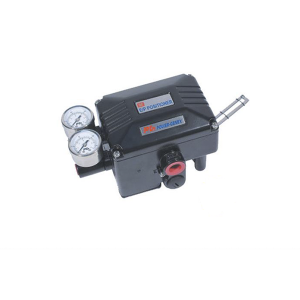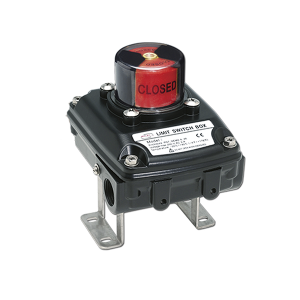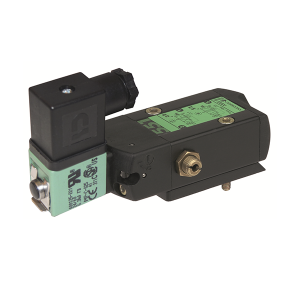
Flowmeter
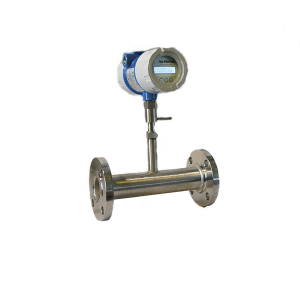
Flowmeters designed for industrial and automation applications, providing accurate measurement of liquid and gas flow using a wide range of technologies suited to different process requirements.
Overview
A flowmeter is a device used to measure the flow rate of liquids or gases within a system. Selecting the correct flowmeter requires not only knowledge of available meter types, but also practical experience derived from real-world applications, installation conditions, and process requirements.
Flowmeter Selection Approach (As Provided)
Flowmeter selection typically begins with understanding the application requirements and the type of fluid being measured. The first major distinction is whether the flow consists of liquids, gases, solids, or air. Each category immediately eliminates many unsuitable flowmeter technologies.
Common Flowmeter Technologies (As Provided)
There are numerous flow measurement technologies available for both liquids and gases, and for closed or open channel systems. No single flowmeter type works optimally for every application, and at least ten different technologies are commonly used across industries.
Positive Displacement Flowmeters (As Provided)
Positive displacement meters are used for both liquids and gases and are known for high accuracy. They operate by repeatedly capturing and releasing fixed volumes of fluid, similar to a bucket mechanism. Common types include oval gear, reciprocating piston, nutating disc, and rotary piston meters.
Differential Pressure Flow Measurement (As Provided)
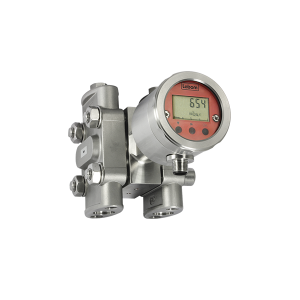
Differential pressure-based flow measurement remains one of the most widely used techniques in the process industries. It is simple, cost-effective, and relies on pressure transmitters that are often already installed for pressure or level measurement.
Mechanical Volumetric Flowmeters (As Provided)
Mechanical meters such as turbines, paddlewheels, impellers, and propellers measure flow by converting the rotational speed of a moving element into a volumetric flow value. Accuracy can range from approximately 1% of reading to 5% of full scale, depending on design and application.
Electromagnetic & Coriolis Flowmeters (As Provided)
Spool-piece electromagnetic flowmeters measure average fluid velocity across the pipe cross-section and can achieve high installed accuracy. Coriolis mass flowmeters are considered among the most accurate flow measurement devices available, directly measuring mass flow rather than volume.
Ultrasonic Flowmeters (As Provided)
Ultrasonic flowmeters operate using transit time or Doppler principles. While highly versatile, they are often misapplied. When correctly selected and installed, ultrasonic meters perform well within their intended operating range.
Thermal Dispersion & Vortex Flowmeters (As Provided)
Thermal dispersion flowmeters are used for low-flow and mass flow measurement, especially for gases. Vortex shedding and other fluidic meters have no moving parts and utilize flow-induced oscillations for measurement, offering durability and reduced maintenance.
Open Channel Flow Measurement (As Provided)
In open channel applications, the flowmeter is effectively the flow restriction itself, such as a weir or flume. The instrument component is typically a level sensor used to calculate flow rate, and accurate measurements can even be achieved using manual level readings.
Performance & Application Considerations (As Provided)
- Fluid type (liquid or gas) and physical properties
- Required accuracy and measurement range
- Installation constraints and available straight pipe runs
- Maintenance requirements and operating environment
Operational Benefits (As Provided)
- Accurate monitoring and control of process flow
- Improved efficiency and process reliability
- Wide range of technologies for diverse applications
- Integration with automation and control systems
Interested in Flowmeter?
Send us your specifications, quantities, or technical questions — our team will respond within 24 hours with pricing, lead time, and engineering details.
- ✓ 24h response
- ✓ 600+ product network
- ✓ No obligation