Pressure Transmitters For Level Measurements
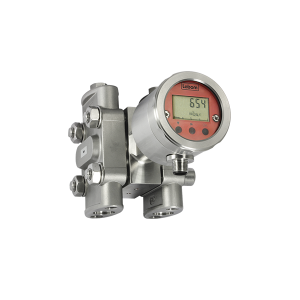
Pressure Transmitters for Level Measurements designed for accurate and reliable liquid level monitoring using hydrostatic and differential pressure principles in industrial applications.
Overview
Pressure Transmitters for Level Measurements are widely used in industrial processes to determine liquid level by measuring pressure. The operating principle is based on hydrostatic head pressure, where the pressure at the bottom of a fluid column is directly proportional to the height of the fluid above it.
Hydrostatic Level Measurement Principle (As Provided)
When a pressure transmitter is installed at the bottom of a tank or vessel, it measures the hydrostatic pressure generated by the fluid column. This pressure value is then converted into a level reading, providing continuous and accurate level measurement.
Differential Pressure (DP) Level Measurement (As Provided)
In many industrial applications, level measurement is performed using differential pressure transmitters. In this method, the DP transmitter senses the pressure difference created by the height of the material in the vessel. The diaphragm of the transmitter responds to this head pressure, allowing level to be measured as an inferential parameter.
Continuous vs Point Level Measurement (As Provided)
Continuous level sensors measure the exact level of a substance within a defined range, providing real-time level data. Point-level sensors, by contrast, only indicate whether the level is above or below a specific point and are commonly used for high-level or low-level alarms.
Accuracy & Performance Characteristics (As Provided)
These pressure transmitters offer very high accuracy across a wide temperature range, excellent repeatability, and long-term stability. Their performance makes them suitable for critical level measurement applications in demanding industrial environments.
Installation & Communication (As Provided)
Multiple transmitters can be interconnected in a multi-drop configuration, significantly reducing cabling requirements and simplifying system integration within automation and control networks.
Sensor Construction & Protection (As Provided)
The sensing element is isolated from the process medium by a stainless steel diaphragm and a filling liquid. The electronics are housed within a hermetically sealed transmitter enclosure, providing excellent resistance to shock, vibration, and harsh operating conditions.
Applications (As Provided)
- Liquid level measurement in tanks and vessels
- Industrial process control systems
- Chemical, water treatment, and oil & gas applications
- Level monitoring where direct level sensors are not practical
Operational Benefits (As Provided)
- Accurate and reliable level measurement using proven pressure principles
- High stability and repeatability over long service periods
- Robust construction for harsh industrial environments
- Flexible installation and reduced wiring through multi-drop configurations
- Seamless integration with automation and control systems
Interested in Pressure Transmitters For Level Measurements?
Send us your specifications, quantities, or technical questions — our team will respond within 24 hours with pricing, lead time, and engineering details.
- ✓ 24h response
- ✓ 600+ product network
- ✓ No obligation