Bull Headed Rail
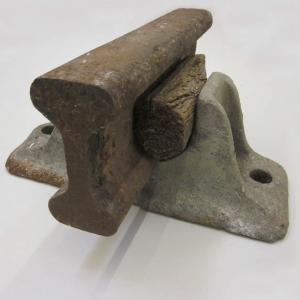
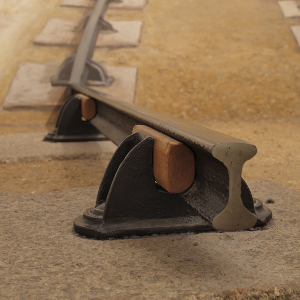
Bull Headed Rails are traditional railway rails characterized by a thicker head relative to the foot, designed to be supported in cast iron chairs and secured with keys. They were historically widely used in the United Kingdom and other early railway systems.
Overview
Bull Headed Rails are rail sections in which the head is made thicker and stronger than the foot by adding more metal to the upper portion. This design was intended to withstand wear on the running surface while maintaining structural integrity. Bull Headed Rails were extensively used in early railway systems, particularly in the United Kingdom.
Design & Construction
Unlike flat footed rails, Bull Headed Rails cannot be fixed directly to sleepers. They require cast iron or steel chairs to support the rail and maintain correct alignment. The rail is seated in the chair and secured in position using wooden or steel keys (wedges).
Structural Characteristics
- Thicker and stronger rail head to resist wear
- Foot smaller than or nearly equal to the head
- Requires chairs for support and positioning
- Secured in chairs using keys or wedges
Merits
- Thick head provides good resistance to rail wear
- Stable seating in chairs ensures accurate track gauge
- Historically suitable for moderate-speed rail traffic
Demerits
- Requires chairs, increasing material and installation cost
- Maintenance is more complex compared to flat footed rails
- Not economical for modern high-speed or heavy-load tracks
- Difficult to adapt to modern fastening systems
Applications
- Traditional railway tracks
- Heritage and preserved railway lines
- Older rail networks, particularly in the UK
Industry Usage
Bull Headed Rails were once the standard rail type in the United Kingdom and several Commonwealth countries. With the development of Flat Footed (Vignoles) Rails, Bull Headed Rails have largely been phased out of modern railway construction, remaining mainly in heritage and historical rail applications.
Interested in Bull Headed Rail?
Send us your specifications, quantities, or technical questions — our team will respond within 24 hours with pricing, lead time, and engineering details.
- ✓ 24h response
- ✓ 600+ product network
- ✓ No obligation