Double Headed Rail
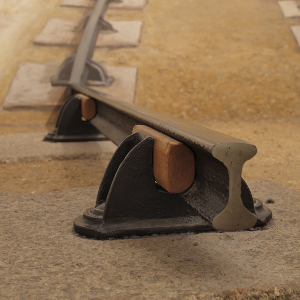
Double Headed Rails are symmetrical railway rails with identical head and foot sections, originally designed to be inverted and reused after wear. They require chairs for support and were widely used in early railway construction.
Overview
Double Headed Rails are railway rail sections in which the head and the foot are identical in shape and size. This design was originally intended to allow the rail to be inverted after the top surface became worn, theoretically extending the service life of the rail.
Design & Construction
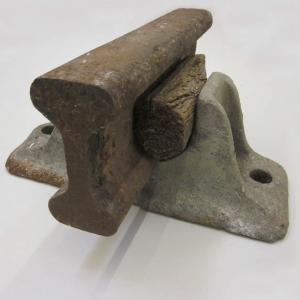
Double Headed Rails cannot be fixed directly onto sleepers. They are supported in cast iron or steel chairs, where the rail sits centrally and is secured using wooden or steel keys. In practice, the lower head (foot) often suffered damage from the chairs, making inversion impractical.
Structural Characteristics
- Symmetrical head and foot sections
- Requires chairs for proper support
- Secured in position using keys or wedges
- No flat base for direct fastening to sleepers
Merits
- Theoretically reusable by reversing the rail after wear
- Good structural balance due to symmetrical profile
- Historically suitable for early railway systems
Demerits
- Inversion is rarely practical due to damage to the lower head
- Requires chairs, increasing installation and maintenance cost
- Heavier and less economical compared to flat footed rails
- Obsolete for modern railway construction
Applications
- Early railway tracks
- Heritage and preserved railway systems
- Historical rail infrastructure projects
Industry Usage
Double Headed Rails were widely used in early railway construction, particularly in the 19th century. Over time, they were largely replaced by Bull Headed Rails and later by Flat Footed (Vignoles) Rails, which offered better load distribution and easier installation.
Interested in Double Headed Rail?
Send us your specifications, quantities, or technical questions — our team will respond within 24 hours with pricing, lead time, and engineering details.
- ✓ 24h response
- ✓ 600+ product network
- ✓ No obligation