Submersible Pump
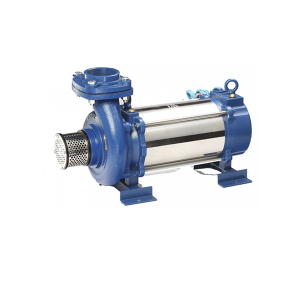
Submersible pumps are electrically driven pumps with a hermetically sealed motor designed to operate fully submerged in the pumped fluid. They efficiently push liquids to the surface by converting rotational energy into pressure energy, making them ideal for water, wastewater, and industrial pumping applications.
Overview
A submersible pump is a pump assembly in which the motor and pump body are tightly sealed and fully immersed in the fluid being pumped. Unlike surface pumps that pull fluid upward, submersible pumps push the fluid to the surface, improving efficiency and reducing cavitation risk.
Operating Principle
The pump converts the rotary motion of the electric motor into kinetic energy through a rotating impeller. Fluid enters through the intake, is accelerated by the impeller, then passes through a diffuser where kinetic energy is converted into pressure energy, allowing the fluid to be discharged to the surface.
Design Characteristics
- Hermetically sealed electric motor
- Close-coupled pump and motor assembly
- Designed to operate fully submerged
- Efficient heat dissipation through surrounding fluid
Key Advantages
- High efficiency due to pushing rather than pulling fluid
- Reduced risk of cavitation
- Quiet operation since the pump is underwater
- Space-saving installation with no priming required
Applications
- Water supply and well pumping
- Wastewater and sewage systems
- Drainage and flood control
- Industrial process water applications
- Oil and gas electric submersible pump (ESP) systems
Interested in Submersible Pump?
Send us your specifications, quantities, or technical questions — our team will respond within 24 hours with pricing, lead time, and engineering details.
- ✓ 24h response
- ✓ 600+ product network
- ✓ No obligation