Dosing Pump
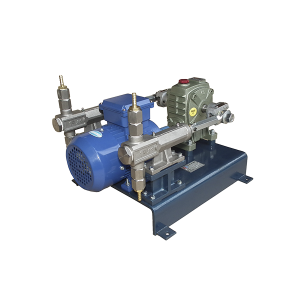
Dosing pumps are positive displacement pumps designed to inject precise and controlled quantities of chemicals or additives into water, gas, or process streams, ensuring accurate dosing in industrial and commercial applications.
Overview
A dosing pump is a small positive displacement pump used to deliver an exact and repeatable flow rate of a chemical or substance into a system. It is widely used where precise dosing and controlled injection are required.
Operating Principle
The pump draws a measured volume of fluid into an internal chamber and then injects this exact quantity into a pipe, tank, or process line. This cycle is repeated to maintain a constant and accurate dosing rate.
Main Characteristics
- High accuracy and repeatability
- Positive displacement pumping principle
- Suitable for low flow and precise injection
- Compatible with a wide range of chemicals
Applications
- Water and wastewater treatment
- Chemical processing
- Industrial manufacturing processes
- Agriculture and fertilization systems
- Medical and laboratory applications
Technical Specifications
- Flow range: 0.1 mL/h to 1000 L/h depending on model
- Pressure rating: up to 20 bar (standard), higher on request
- Accuracy: ±1% of set flow rate
- Drive types: motor-driven, solenoid, or pneumatic
Dosing Pump Types
- Diaphragm dosing pumps — chemical-resistant, leak-free
- Piston dosing pumps — high-pressure, high-accuracy
- Peristaltic dosing pumps — gentle handling, no seal contact
Common Dosing Applications
- Water treatment: chlorine, coagulant, pH adjustment chemicals
- Food & beverage: flavouring, preservatives, nutrients
- Petrochemical: corrosion inhibitors, demulsifiers