Butterfly Valve
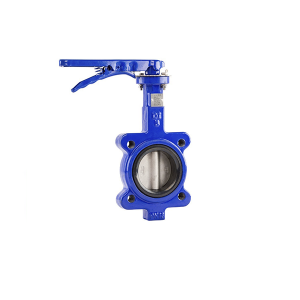
Butterfly valves are quarter-turn flow control devices designed for fast operation, compact installation, and efficient regulation of liquids and gases in low to medium pressure applications.
Overview
A butterfly valve is a quarter-turn rotational motion valve used to start, stop, regulate, or throttle flow in a piping system. Due to its simple design and fast operation, it is widely preferred in large diameter pipelines where space and weight savings are critical.
Working Principle
The valve operates using a circular disc mounted on a shaft. When the disc is rotated parallel to the flow, the valve is fully open. A 90° rotation positions the disc perpendicular to the flow, completely shutting off the line. Intermediate positions allow throttling control.
Design Characteristics
- Short, compact body design
- Circular disc as flow control element
- Metal-to-metal or soft seat options
- Top and bottom shaft bearings with stuffing box
- Low pressure drop with high flow efficiency
Types of Butterfly Valves
- Wafer type
- Lug type
- Single flange type
- Double flange type
- High performance butterfly valves for shutoff and throttling
Operation
- Quarter-turn (90°) operation
- Manual lever operation for smaller sizes
- Gearbox-operated handwheel for larger sizes
- Compatible with pneumatic, hydraulic, and electric actuators
Advantages
- Compact and lightweight design
- Quick opening and closing
- Lower cost compared to gate, globe, and ball valves
- Low maintenance due to fewer moving parts
- Suitable for large diameter applications
Limitations
- Limited throttling at high differential pressures
- Potential cavitation and choked flow
- Disc movement affected by flow turbulence
Applications
- Cooling water systems
- Air and gas pipelines
- Fire protection systems
- Slurry and suspended solid services
- Vacuum applications
- High-temperature and high-pressure water and steam services
Interested in Butterfly Valve?
Send us your specifications, quantities, or technical questions — our team will respond within 24 hours with pricing, lead time, and engineering details.
- ✓ 24h response
- ✓ 600+ product network
- ✓ No obligation