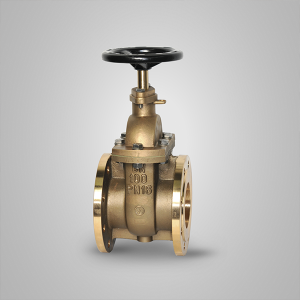
Gate Valve
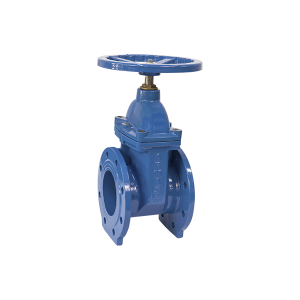
Gate valves are isolation valves designed for fully open or fully closed operation, providing minimal pressure loss and a straight, unobstructed flow path. They are widely used in pipelines where reliable shut-off and low flow resistance are required.
Overview
Gate valves are primarily used as on-off isolation valves in piping systems. They are not intended for throttling or flow regulation, but rather to allow or completely stop fluid flow with minimal pressure loss.
Operating Principle
Gate valves operate by raising or lowering a gate using a threaded stem. Turning the stem clockwise or counterclockwise moves the gate vertically to open or close the flow path. When fully open, the valve provides a full-bore passage with virtually no obstruction.
Design Characteristics
- Multi-turn valve operation
- Full bore design with very low pressure drop
- Slow opening and closing reduces water hammer effects
- Suitable for pigging operations in pipelines
Types of Gate Valves
- Parallel Gate Valves: Use a flat gate between parallel seats, including knife gate valves
- Wedge-Shaped Gate Valves: Use inclined seats and a solid or flexible wedge
Seat Design
- Metal Seated Gate Valves: Traditional design, suitable for high temperatures but sensitive to debris
- Resilient Seated Gate Valves: Rubber-coated wedge allows tight sealing even with impurities present
Operating Conditions
- Liquids: Potable water, wastewater, neutral liquids
- Temperature: -20 °C to +70 °C (liquids), -20 °C to +60 °C (gas)
- Pressure: Up to 16 bar differential pressure
- Flow Velocity: Up to 5 m/s (liquids), up to 20 m/s (gas)
Applications
- Water and wastewater pipelines
- Gas distribution systems
- Industrial process piping
- Oil, chemical, and utility services
Key Advantages
- Minimal pressure loss when fully open
- Reliable shut-off performance
- Simple and robust construction
- Suitable for a wide range of fluids and applications
Interested in Gate Valve?
Send us your specifications, quantities, or technical questions — our team will respond within 24 hours with pricing, lead time, and engineering details.
- ✓ 24h response
- ✓ 600+ product network
- ✓ No obligation