Engraving Cutters
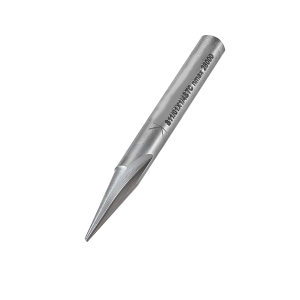
High quality Engraving Cutters designed for precise marking, engraving, and fine-detail machining, offering excellent durability, sharpness, and accuracy for CNC and manual applications.
Overview
Engraving cutters are precision cutting tools specifically designed for marking, engraving, and fine-detail machining on a wide range of materials. These tools are commonly used in CNC milling machines, engraving machines, and marking systems where accuracy, surface finish, and repeatability are critical.
Tool Design & Geometry
Engraving cutters are typically manufactured with a half-round or V-shaped geometry, allowing them to produce clean, sharp lines and intricate details. Their geometry enables excellent control over cutting depth and line width, making them ideal for fine engraving applications.
Marking Cutters vs Engraving Cutters
Marking cutters are a specialized type of engraving cutter. All marking cutters fall under the engraving cutter category; however, not all engraving cutters are suitable for marking applications. Marking cutters typically feature two flutes and a reinforced web at the tip, providing greater strength and resistance to breakage. This makes them ideal for repetitive marking tasks such as serial numbers, part identification, and traceability codes.
Fine Detail Engraving
Standard engraving cutters are designed for highly detailed and decorative applications. They excel in fine artwork, logos, branding elements, text engraving, jewelry engraving, and complex patterns where precision and aesthetic quality are essential.
Materials Compatibility
- Aluminum and non-ferrous metals
- Carbon steel and stainless steel
- Plastics and polymers
- Brass, copper, and bronze
- Wood, composites, and laminated materials
Applications
- Serial number and part identification engraving
- Logo, branding, and decorative engraving
- Jewelry and fine metal engraving
- Mold and die marking
- Industrial traceability and labeling
Tool Strength & Durability
Due to their reinforced tip geometry, engraving and marking cutters perform exceptionally well in harder-to-machine materials. The strengthened cutting edge reduces tool breakage and ensures consistent performance even during high-repeat engraving operations.
Comparison with Laser Engraving
Unlike laser engraving, which uses a focused laser beam to mark or cut materials, mechanical engraving cutters physically remove material. This allows engraving cutters to create deeper, permanent markings and crisp edges, particularly on metals where laser marking may only discolor the surface.
Coatings & Materials
Engraving cutters are commonly manufactured from solid carbide or high-speed steel (HSS). Advanced coatings such as TiN or TiAlN may be applied to enhance wear resistance, heat tolerance, and tool life, especially in demanding production environments.
Advantages
- Exceptional precision and fine detail capability
- Strong tip geometry reduces tool breakage
- Suitable for both decorative and industrial marking
- Compatible with CNC and manual engraving systems
- Produces permanent, high-contrast markings
Tool Selection Considerations
When selecting an engraving cutter, factors such as material hardness, engraving depth, line width, spindle speed, and feed rate should be considered. Proper tool selection ensures clean engraving, long tool life, and consistent results.
Industrial Importance
Engraving cutters play a vital role in modern manufacturing by enabling permanent identification, branding, and aesthetic detailing of components. They are widely used across automotive, aerospace, medical, jewelry, mold-making, and general engineering industries.
Production Efficiency
With their durable construction and precise geometry, engraving cutters help reduce tool wear, minimize downtime, and maintain consistent engraving quality, contributing to higher productivity and lower operational costs.